
CSIRTs Around the World – Azerbaijan
Hello, this is Shihono from the Global Coordination Division. In early March, we traveled to Baku, the capital of Azerbaijan, and had the opportunity to visit five organizations, including CSIRTs and facilities involved in cyber security workforce development. In this article, I would like to introduce an overview of these visits.
Azerbaijan, the “Land of Fire,” and Its Capital Baku, the “City of Winds”

Azerbaijan is located in the Caucasus region, which stretches between the Caspian Sea and the Black Sea. The country possesses abundant natural resources such as natural gas and oil. It is sometimes referred to as the “Land of Fire” due to places like Yanar Dag, a mountain where natural gas continuously burns as it seeps from the ground.
Its capital, Baku, lies along the Caspian Sea. The city left a strong impression with its coexistence of an old town that preserves the atmosphere of the medieval period and futuristic buildings that reflect its recent economic development. The name “Baku” is said to mean “City of Winds” in Persian, and the strong winds blowing in from the Caspian Sea seemed to embody its name.
CSIRTs in Azerbaijan
In Azerbaijan, CSIRTs have been established across various sectors, including government, the domestic Internet, and research and education networks, to address cyber security issues in line with their respective roles. Specifically, there are three CSIRTs: CERT.AZ[1], CERT.GOV.AZ[2], and AzScienceCERT[3]. These organizations contribute to strengthening national cyber security through activities such as awareness-raising and incident response.
JPCERT/CC has previously collaborated with CERT.AZ and CERT.GOV.AZ, both members of FIRST, through international conferences and workshops. This visit marked our first engagement with AzScienceCERT. In the following sections, we provide a brief overview of each CSIRT.
CERT.AZ
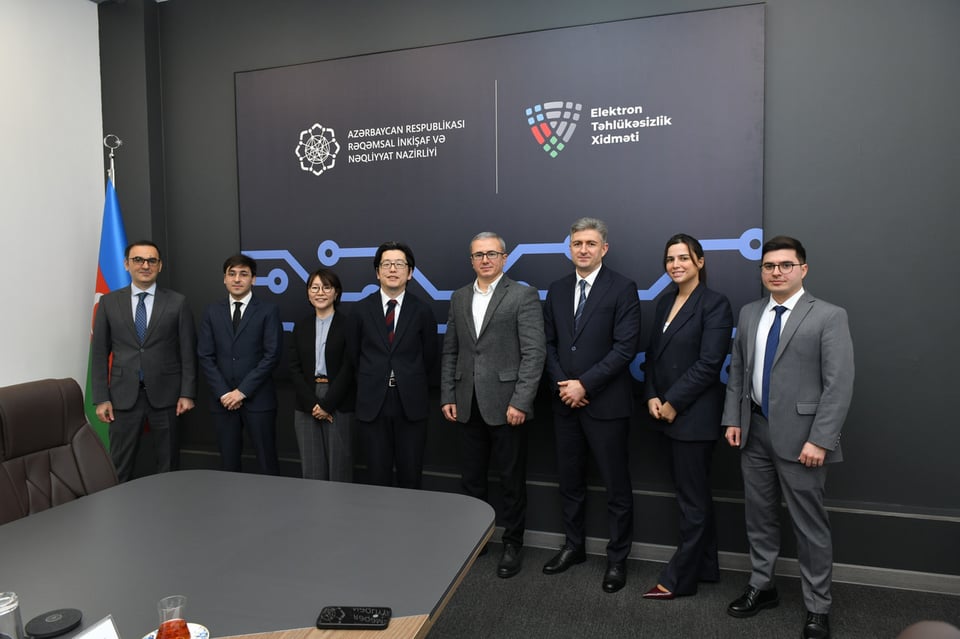
CERT.AZ is a CSIRT established in 2012 and is operated by the Electronic Security Service under the Ministry of Digital Development and Transport, which oversees ICT policy, digital government, telecommunications infrastructure, and transport infrastructure.
Its primary activities include coordinating and collaborating with stakeholders involved in national information infrastructure, as well as providing incident response support for private organizations and general users. It is also engaged in collecting and analyzing threat intelligence and promoting cyber security awareness. In responding to cyber threats, CERT.AZ places strong emphasis on information sharing—not only domestically but also internationally—to address cross-border threats. During our discussions, they expressed their intention to further strengthen information sharing with international partners, including Japan.
CERT.AZ is also actively involved in awareness-raising initiatives aimed at improving security literacy. In addition to disseminating information through TV commercials and podcasts, they also deliver security alerts via Azerbaijan’s digital ID application platform, “myGov.”
JPCERT/CC previously held an online workshop with CERT.AZ in August 2025 to exchange information on activities and current situations. Meeting in person this time helped strengthen our relationship and will likely enable smoother coordination in emergency situations. CERT.AZ has also participated in JSAC, a conference hosted by JPCERT/CC, and we have continued to engage with them through various opportunities.
CERT.GOV.AZ
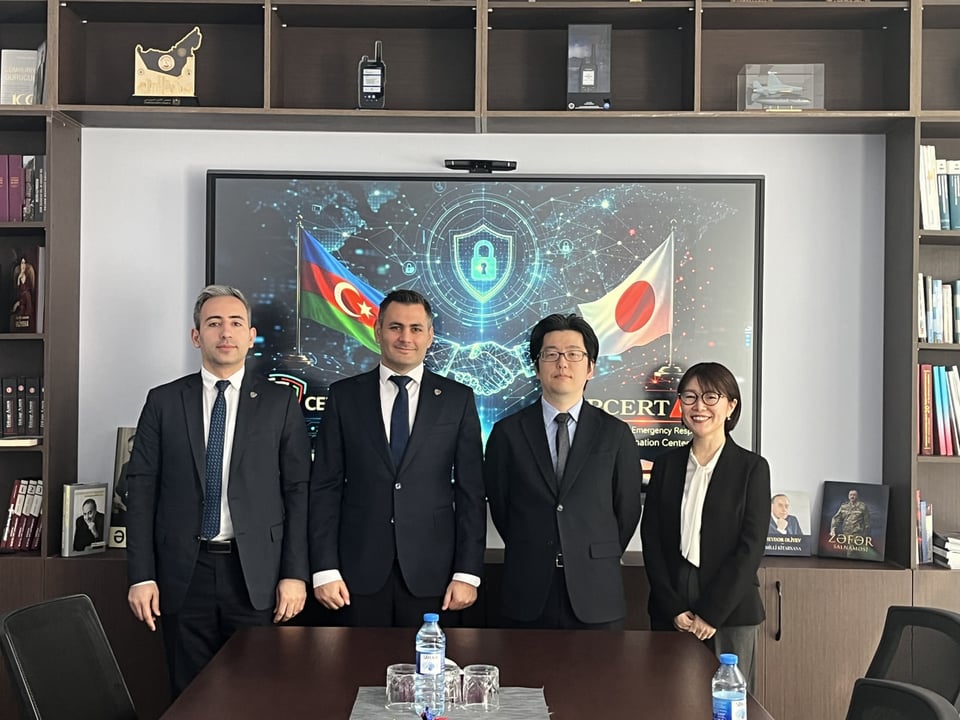
CERT.GOV.AZ is a government-focused CSIRT established in 2008 under the State Service for Special Communication and Information Security (SCISSS), one of Azerbaijan’s national security agencies.
Its primary responsibilities include detecting cyber attacks targeting government networks, implementing preventive measures, monitoring the security of government systems, and providing incident response support. CERT.GOV.AZ operates a Security Operations Center (SOC) on a 24/7 basis and also maintains specialized teams dedicated to digital forensics and malware analysis. In addition, to promote cyber security awareness, the organization runs a dedicated website, focusing on the dissemination of threat intelligence. Through this platform, it publishes threat analysis reports and releases internally developed malware analysis tools.
When incident investigations reveal cases that may affect entities outside the country, they notify their international counterparts. During our discussions, we confirmed that we will continue to cooperate through information sharing and other collaborative activities.
AzScienceCERT

AzScienceCERT is a CSIRT operating under the Institute of Information Technology of the Azerbaijan National Academy of Sciences (ANAS). It was established in 2011 and provides services to universities, research institutions, and educational organizations that utilize AzScienceNet, the national research and education network. Its activities include information security risk management and incident response support.
The Institute of Information Technology houses various facilities, including a data center for AzScienceNet, research centers focused on information technology and cyber security, and an operations center responsible for network management and monitoring. As a research institution, it conducts studies and conferences on scientific and practical topics such as software engineering and digital forensics. During our visit, they expressed an interest in promoting international collaboration in these areas.
Organizations Supporting Human Resource Development and Capacity Building
In Azerbaijan, efforts to develop cyber security talent and enhance the capabilities of private-sector organizations are actively carried out alongside CSIRT activities. During this visit, we also had the opportunity to visit the following two organizations.
Azerbaijan Cybersecurity Center
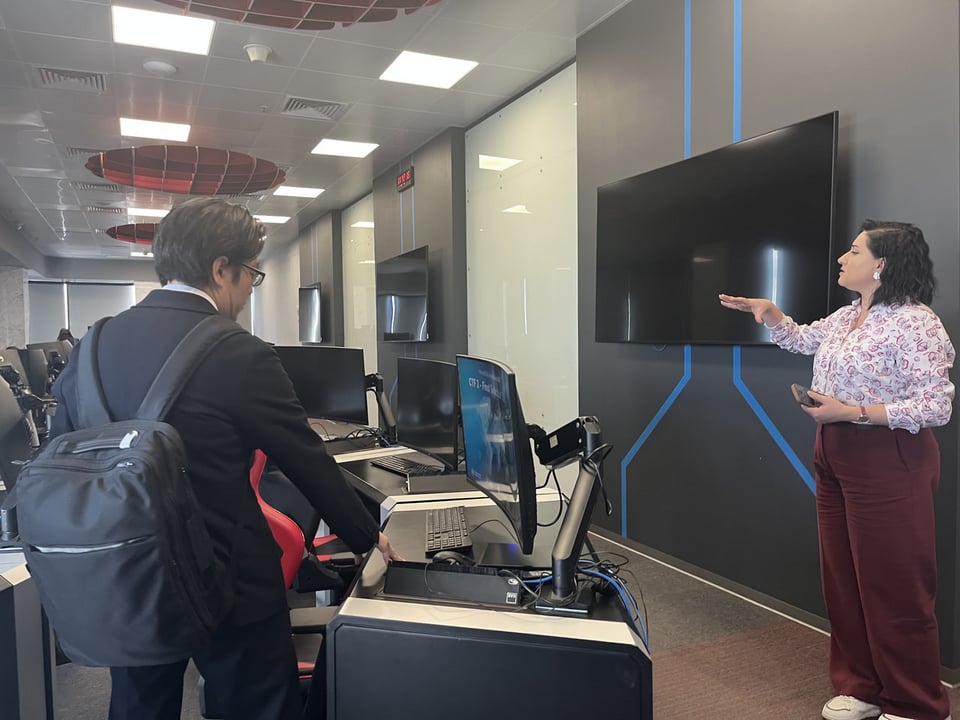
The Azerbaijan Cybersecurity Center [4] is a national-level education and training hub established to develop cyber security talent within the country. It was founded in 2023 through the initiative of the Ministry of Digital Development and Transport and the Innovation and Digital Development Agency. The Technion – Israel Institute of Technology serves as an international education partner, supporting the center through curriculum development and the dispatch of instructors.
One of the key features of the center’s training programs is their strong focus on practical skills, in contrast to traditional academic education at universities. Participants undergo intensive training over extended periods of six months to one year, including hands-on exercises based on realistic cyber attack and defense scenarios.
Admission to the program is competitive and requires passing a selection process. Applicants must be at least 17 years old (with no upper age limit), and are expected to have advanced English proficiency and basic IT skills. The program receives around 2,000 applications for approximately 60 available positions, making it highly competitive. For students enrolled in partner universities, participation in the program can also count toward graduation credits, which adds to its appeal.
To date, 480 participants have completed the program, and 86% of them have gone on to work in the cyber security field. The center also offers various career support opportunities, such as internships with companies and networking events with alumni, which contribute to this high employment rate. During our visit, we were given a tour of the facility and had the opportunity to interact with highly motivated trainees.
In addition to these human resource development initiatives, Azerbaijan is also promoting activities that support the growth of the cyber security sector through the formation of networks among private companies and experts.
Association of Cybersecurity Organizations of Azerbaijan (AKTA)
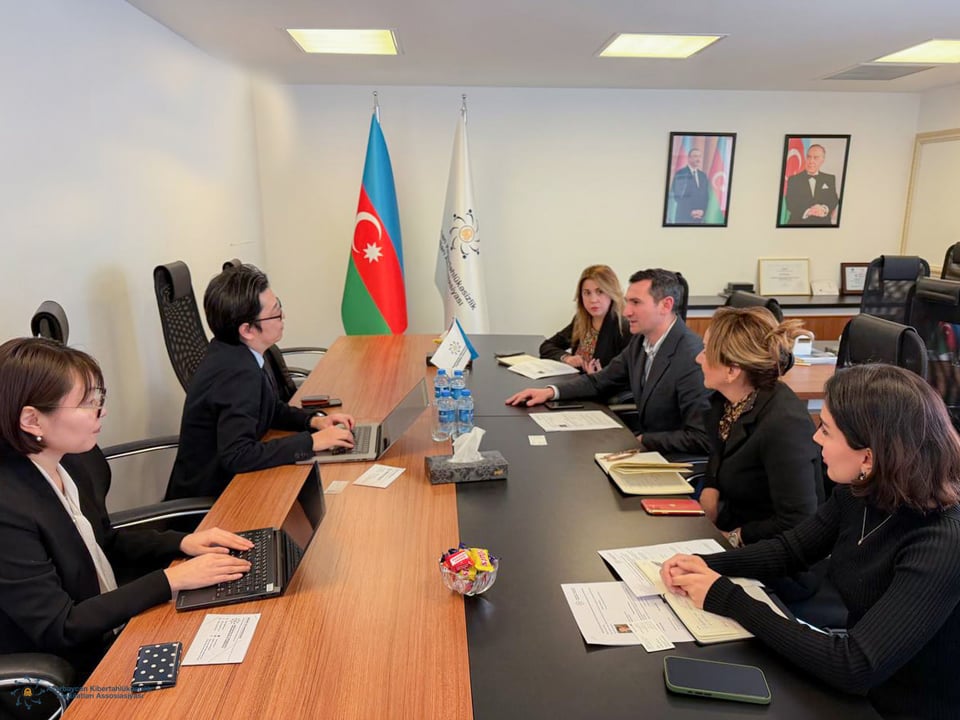
The Association of Cybersecurity Organizations of Azerbaijan (AKTA)[5] is a non-profit organization established in 2022 that brings together cyber security-related companies, organizations, and experts across the country. It serves as a platform to connect stakeholders in the cyber security field and works to strengthen Azerbaijan’s cyber security ecosystem. Its activities include enhancing the overall security environment, promoting education, training, and awareness, fostering public–private collaboration, and facilitating information sharing and joint initiatives.
Currently, around 60 member organizations participate in AKTA, including cyber security firms, IT companies, telecommunications operators, and educational institutions. One of the challenges highlighted during our discussions was that while security measures in critical infrastructure sectors have progressed, small and medium-sized enterprises (SMEs) still lag behind in implementing adequate protections. In addressing such challenges, organizations like AKTA play an important role.
AKTA is also actively engaged in building international networks through exchanges with companies and experts in countries such as Türkiye, Kazakhstan, and Uzbekistan, particularly in the areas of education and industry. The association organizes an international event called the “National Cybersecurity Forum”, where topics such as critical infrastructure protection, international cooperation, capacity building, and cyber diplomacy are discussed. They also expressed interest in having speakers from Japan participate in the future.
Conclusion
In Azerbaijan, efforts to strengthen cyber security at the national level are progressing alongside ongoing digital transformation. In 2023, the country formulated the “Information Security and Cybersecurity Strategy (2023–2027),” which identifies key priority areas such as the protection of critical information infrastructure, enhancement of cyber threat response capabilities, human resource development, and the promotion of international cooperation. Through this visit, we observed that government agencies, private-sector organizations, and research institutions are each fulfilling their respective roles while working collaboratively to improve the country’s overall cyber security capabilities.
We were also impressed by the strong sense of motivation among the professionals we met, who are actively working to advance cyber security initiatives and international collaboration. This positive energy resonated with the dynamic atmosphere of Baku, a city that continues to grow and evolve, and was truly inspiring for us as well. Moving forward, we hope to further strengthen cooperation with CSIRTs around the world through continued exchanges, expanding information sharing and collaboration to address cross-border incidents and emerging threats.
Shihono Yonezawa
(This document was machine-translated and manually reviewed.)
References
[1] CERT.AZ
https://cert.az/
[2] CERT.GOV.AZ
https://cert.gov.az/
[3] AzScienceCERT
https://azsciencenet.az/az/service/3
[4] Azerbaijan Cybersecurity Center
https://www.akm.az/
[5] Association of Cybersecurity Organization of Azerbaijan
https://akta.az/en
